


Portal:Politics

| Main | Topics and categories | Tasks and projects |
The Politics portal
.jpg?lang=en)
Politics is the set of activities that are associated with making decisions in groups, or other forms of power relations among individuals, such as the distribution of status or resources. The branch of social science that studies politics and government is referred to as political science.
Politics may be used positively in the context of a "political solution" which is compromising and non-violent, or descriptively as "the art or science of government", but the word often also carries a negative connotation. The concept has been defined in various ways, and different approaches have fundamentally differing views on whether it should be used extensively or in a limited way, empirically or normatively, and on whether conflict or co-operation is more essential to it.
A variety of methods are deployed in politics, which include promoting one's own political views among people, negotiation with other political subjects, making laws, and exercising internal and external force, including warfare against adversaries. Politics is exercised on a wide range of social levels, from clans and tribes of traditional societies, through modern local governments, companies and institutions up to sovereign states, to the international level.
In modern states, people often form political parties to represent their ideas. Members of a party often agree to take the same position on many issues and agree to support the same changes to law and the same leaders. An election is usually a competition between different parties.
A political system is a framework which defines acceptable political methods within a society. The history of political thought can be traced back to early antiquity, with seminal works such as Plato's Republic, Aristotle's Politics, Confucius's political manuscripts and Chanakya's Arthashastra. (Full article...)
Selected article
Political Animals and Animal Politics is a 2014 edited collection published by Palgrave Macmillan and edited by the green political theorists Marcel Wissenburg and David Schlosberg. The work addresses the emergence of academic animal ethics informed by political philosophy as opposed to moral philosophy. It was the first edited collection to be published on the topic, and the first book-length attempt to explore the breadth and boundaries of the literature. As well as a substantial introduction by the editors, it features ten sole-authored chapters split over three parts, respectively concerning institutional change for animals, the relationship between animal ethics and ecologism, and real-world laws made for the benefit of animals. The book's contributors were Wissenburg, Schlosberg, Manuel Arias-Maldonado, Chad Flanders, Christie Smith, Clemens Driessen, Simon Otjes, Kurtis Boyer, Per-Anders Svärd, and Mihnea Tanasescu. The focus of their individual chapters varies, but recurring features include discussions of human exceptionalism, exploration of ways that animal issues are or could be present in political discourse, and reflections on the relationship between theory and practice in politics.
Featured picture
.jpg?lang=en)
David Ben-Gurion (born David Grün; 16 October 1886 – 1 December 1973) was the primary national founder of the State of Israel and the first Prime Minister of Israel. Adopting the name of Ben-Gurion in 1909, he rose to become the preeminent leader of the Jewish community in British-ruled Mandatory Palestine from 1935 until the establishment of the State of Israel in 1948, which he led until 1963 with a short break in 1954–55.
 Featured lists -

-


The Indiana Statehouse in Indianapolis, which houses the office of the governor
The governor of Indiana is the head of government of the U.S. state of Indiana. The governor is the head of the executive branch of Indiana's state government and is charged with enforcing state laws.
While a territory, Indiana had two governors appointed by the president of the United States. Since statehood in 1816, it has had 49 governors, serving 51 distinct terms; Isaac P. Gray and Henry F. Schricker are the only governors to have served non-consecutive terms. Four governors have served two four-year terms; territorial governor William Henry Harrison served for 11 years. The shortest-serving governor is Henry S. Lane, who served two days before resigning to become a U.S. senator. The current governor is Mike Braun, who took office on January 13, 2025. (Full article...) -

The twenty signatories
The signatories of the Act of Independence of Lithuania were the twenty Lithuanian men who signed the Act of Independence of Lithuania on February 16, 1918. The signatories were elected to the Council of Lithuania by the Vilnius Conference in September 1917 and entrusted with the mission of establishing an independent Lithuanian state. The proclaimed independence was established only in late 1918, after Germany lost World War I and its troops retreated from Lithuanian territory. What followed was a long process of building the state, determining its borders, and gaining international diplomatic recognition. The signatories succeeded in their mission and independent Lithuania survived until the Soviet Union occupied the state on June 15, 1940.
Their political, professional, and social backgrounds were diverse. Several rose to political prominence; Antanas Smetona and Aleksandras Stulginskis were later elected Presidents of Lithuania and Jonas Vileišis went on to become mayor of Kaunas, the temporary capital of Lithuania. After Lithuania lost its independence during World War II, six of the surviving signatories were sent to prison or executed by the Soviet government and six others emigrated to Western countries. (Full article...) -
There are 114 counties and one independent city in the U.S. State of Missouri. Following the Louisiana Purchase and the admittance of Louisiana into the United States in 1812, five counties were formed out of the Missouri Territory at the first general assembly: Cape Girardeau, New Madrid, Saint Charles, Saint Louis, and Ste. Genevieve. Most subsequent counties were apportioned from these five original counties. Six more counties were added through the 1836 Platte Purchase, the acquired lands of which formed the northwest tip of the state and consisted of Andrew, Atchison, Buchanan, Holt, Nodaway, and Platte counties.
In Missouri, the county level of government comes between those of the city and the state. Its primary responsibilities include maintaining roads, providing security, prosecuting criminals, and collecting taxes. Elected officials at this level include a sheriff, prosecuting attorney, and assessor. (Full article...) -

Mike DeWine has been governor since January 14, 2019.
The governor of Ohio is the head of government of Ohio and the commander-in-chief of the U.S. state's military forces. The officeholder has a duty to enforce state laws, the power to either approve or veto bills passed by the Ohio General Assembly, the power to convene the legislature and the power to grant pardons, except in cases of treason and impeachment.
There have been 64 governors of Ohio, serving 70 distinct terms. The longest term was held by Jim Rhodes, who was elected four times and served just under sixteen years in two non-consecutive periods of two terms each (1963–1971 and 1975–1983). The shortest terms were held by John William Brown and Nancy Hollister, who each served for only 11 days after the governors preceding them resigned in order to begin the terms to which they had been elected in the United States Senate; the shortest-serving elected governor was John M. Pattison, who died in office five months into his term. (Full article...) -

The official seal of the vice president of the Philippines
The vice president of the Philippines is the second-highest executive official in the government of the Philippines. The vice president is directly elected by qualified voters to a six-year term, and may be a cabinet member without confirmation from the Commission on Appointments and is first in the presidential line of succession.[1]
The incumbent vice president is Sara Duterte, who assumed office on June 30, 2022.[2] (Full article...) -

Map of Sullivan County, Pennsylvania with Municipal Labels showing Boroughs (red) and Townships (white)
Sullivan County, Pennsylvania, United States, is divided into 13 incorporated municipalities. State law defines the two kinds of municipalities present in the county: four boroughs and nine townships. In the 2010 census, the population of Sullivan County was 6,428, making it an "Eighth Class County", defined by Pennsylvania law as "having a population of less than 20,000 inhabitants". Its county seat is Laporte, which was the smallest county seat in Pennsylvania by population, as of 2001.
Sullivan County is located in north central Pennsylvania, about 123 miles (198 km) northwest of Philadelphia and 195 miles (314 km) east-northeast of Pittsburgh. The county covers 452 square miles (1,170 km2), of which 450 square miles (1,165 km2) is land and 2 square miles (5.2 km2) (0.53%) is water. Its municipalities range in size from the borough of Dushore with 0.9 square miles (2.3 km2) to Davidson Township with 78.2 square miles (203 km2). Cherry Township has the highest population of any municipality (1,705 or 26.5% of the county total as of 2010), while the borough of Eagles Mere has the lowest population (120 or 1.9%). (Full article...) -

Ron DeSantis has been governor since January 8, 2019.
The governor of Florida is the head of government of the U.S. state of Florida. The governor is the head of the executive branch of the government of Florida and is the commander-in-chief of the Florida National Guard and Florida State Guard.
The current officeholder is Ron DeSantis, a member of the Republican Party who took office on January 8, 2019. (Full article...) -
The sultans of the Ottoman Empire (Turkish: Osmanlı padişahları), who were all members of the Ottoman dynasty (House of Osman), ruled over the transcontinental empire from its perceived inception in 1299 to its dissolution in 1922. At its height, the Ottoman Empire spanned an area from Hungary in the north to Yemen in the south and from Algeria in the west to Iraq in the east. Administered at first from the city of Söğüt since before 1280 and then from the city of Bursa since 1323 or 1324, the empire's capital was moved to Adrianople (now known as Edirne in English) in 1363 following its conquest by Murad I and then to Constantinople (present-day Istanbul) in 1453 following its conquest by Mehmed II.
The Ottoman Empire's early years have been the subject of varying narratives, due to the difficulty of discerning fact from legend. The empire came into existence at the end of the 13th century, and its first ruler (and the namesake of the Empire) was Osman I. According to later, often unreliable Ottoman tradition, Osman was a descendant of the Kayı tribe of the Oghuz Turks. The eponymous Ottoman dynasty he founded endured for six centuries through the reigns of 36 sultans. The Ottoman Empire disappeared as a result of the defeat of the Central Powers, with whom it had allied itself during World War I. The partitioning of the Empire by the victorious Allies and the ensuing Turkish War of Independence led to the abolition of the sultanate in 1922 and the birth of the modern Republic of Turkey in 1922. (Full article...) -
The U.S. state of Alabama has 67 counties. Each county serves as the local level of Alabama government within its borders. The land enclosed by the present state borders was joined to the United States of America gradually. Following the American Revolutionary War, West Florida was ceded to Spain by treaty while the remainder was organized primarily as the Mississippi Territory, and later the Alabama Territory. The territorial assembly established some of the earliest county divisions that have survived to the present, including the earliest county formation, that of Washington County, created on June 4, 1800. In 1814, the Treaty of Fort Jackson opened the territory to American settlers, which in turn led to a more rapid rate of county creation. Alabama was admitted to the Union as the 22nd state in 1819. The Alabama state legislature formed additional counties from former native lands as the Indian Removal Act took effect and settlers populated different areas of Alabama. In 1820, Alabama had 29 counties. By 1830 there were 36 and Native Americans still occupied large areas of land in northeast and far western Alabama. By 1840, 49 counties had been created; 52 by 1850; 65 by 1870; and the present 67 counties by 1903. Houston County was the last county created in the state, on February 9, 1903.
According to 2024 U.S. Census data, the average population of Alabama's 67 counties is 76,981, with Jefferson County as the most populous (664,744), and Greene County (7,127) the least. The average land area is 756 sq mi (1,958 km2). The largest county is Baldwin (1,590 sq mi, 4,118 km2) and the smallest is Etowah (535 sq mi, 1,386 km2). The Constitution of Alabama requires that any new county in Alabama cover at least 600 square miles (1,600 km2) in area, effectively limiting the creation of new counties in the state. (Full article...) -
A total of 41 counties (Romanian: județe), along with the municipality of Bucharest, constitute the official administrative divisions of Romania. They represent the country's NUTS-3 (Nomenclature of Territorial Units for Statistics – Level 3) statistical subdivisions within the European Union and each of them serves as the local level of government within its borders. Most counties are named after a major river, while some are named after notable cities within them, such as the county seat.
The earliest organization into județe of the Principalities of Wallachia and Moldavia (where they were termed ținuturi) dates back to at least the late 14th century. For most of the time since modern Romania was formed in 1859, the administrative division system has been similar to that of the French departments. The system has since changed several times and the number of counties has varied over time, from the 71 județe that existed before World War II to only 39 after 1968. The current format has largely been in place since 1968 as only small changes have been made since then, the last of which was in 1997. (Full article...) -
The Sultan of Zanzibar (Arabic: سلاطين زنجبار; Swahili: Sultani wa Zanzibar) was the ruler of the Sultanate of Zanzibar, which was created on 19 October 1856 after the death of Said bin Sultan. He had ruled Oman and Zanzibar as the sultan of Oman since 1804. The sultans of Zanzibar were of a cadet branch of the Al Bu Said dynasty of Oman.
In 1698, Zanzibar became part of the overseas holdings of Oman, falling under the control of the sultan of Oman. Omani and other Arab traders had already been prominent in trade with the island for hundreds of years. It was also visited by traders from Persia and India, who arrived with the seasonal musim (west wind). Months later they could return east with a change in the wind. (Full article...) -
The territory of Lithuania is divided into 10 counties (Lithuanian: singular apskritis, plural apskritys), all named after their capitals. The counties are divided into 60 municipalities (Lithuanian: singular savivaldybė, plural savivaldybės): 9 city municipalities, 43 district municipalities and 8 municipalities. Each municipality is then divided into elderates (Lithuanian: singular seniūnija, plural seniūnijos). This division was created in 1994 and slightly modified in 2000.
Until 2010, the counties were administered by county governors (Lithuanian: singular – apskrities viršininkas, plural – apskrities viršininkai) appointed by the central government in Vilnius. Their primary duty was to ensure that the municipalities obeyed the laws and the Constitution of Lithuania. They did not have great powers vested in them, and so it was suggested that 10 counties were too much for Lithuania as the two smallest counties administered only four municipalities. Therefore, on 1 July 2010, the county administrations were abolished, but the counties themselves are retained for statistical and reporting purposes. (Full article...) -
The governor of Colorado is the head of government of the U.S. state of Colorado. The governor is the head of the executive branch of Colorado's state government and is charged with enforcing state laws. The governor has the power to either approve or veto bills passed by the Colorado General Assembly, to convene the legislature, and to grant pardons, except in cases of treason or impeachment. The governor is also the commander-in-chief of the state's military forces.
Seven people served as governor of Colorado Territory over eight terms, appointed by the president of the United States. Since statehood, there have been 38 governors, serving 43 distinct terms. One governor Alva Adams served three non-consecutive terms, while John Long Routt, James Hamilton Peabody, and Edwin C. Johnson each served during two non-consecutive periods. The longest-serving governors were Richard "Dick" Lamm (1975–1987) and Roy Romer (1987–1999), who each served 12 years over three terms. The shortest term occurred on March 16 and 17, 1905, when the state had three governors in the span of 24 hours: Alva Adams won the election, but soon after he took office, the legislature declared his opponent, James Hamilton Peabody, governor, but on the condition that he immediately resign, so that his lieutenant governor, Jesse McDonald, could be governor. Thus, Peabody served less than a day as governor. (Full article...) -

Party Composition of Maryland State Senate districts.
The Maryland Senate is the upper house of the Maryland General Assembly, the state legislature of the U.S. State of Maryland. One Senator is elected from each of the state's 47 electoral districts. As of January 2023, 34 of those seats are held by Democrats and 13 by Republicans. The leader of the Senate is known as the President, a position currently held by Bill Ferguson, who represents Baltimore. In addition, senators elect a President Pro Tempore, and the respective party caucuses elect a majority and minority leader and a majority and minority whip.
Senators are elected in even-numbered years when the President of the United States is not being elected, similar to most other state offices in Maryland. The most recent election was in November 2022. Senators are not term-limited. Should a Senator resign from office before their term expires, the local central committee of the party to which the retiring senator belonged makes a recommendation to the Governor for whom to appoint to the open seat. It is tradition for the Governor to appoint the recommended person. Nine of the current members of the Maryland State Senate were originally appointed, all of whom have since been elected in their own right. Newly elected senators are sworn in and begin work on the second Wednesday of the January following their election. (Full article...) -

Districts of West Bengal
The West Bengal is an Indian state located in eastern portion of the country. As of year 2025, the state is divided into 23 districts and 5 administrative divisions.
The Himalayas lies in the north of West Bengal and the Bay of Bengal is at the south. Between them, the river Ganga flows eastwards and its main distributary, the Hooghly River, flows south to reach the Bay of Bengal. The Siliguri Corridor, which connects North-East India with rest of the India, lies in the North Bengal region of the state. Geographically, West Bengal is divided into a variety of regions—Darjeeling Himalayan hill region, Terai and Dooars region, North Bengal plains, Rarh region, Western plateau and high lands, coastal plains, Sundarbans and the Ganga Delta. (Full article...)


.jpg?lang=en)


.svg?lang=en)
.svg?lang=en)


Selected quote

Selected biography

Domenico Selvo (died 1087) was the 31st Doge of Venice, serving from 1071 to 1084. During his reign as Doge, his domestic policies, the alliances that he forged, and the battles that the Venetian military won and lost laid the foundations for much of the subsequent foreign and domestic policy of the Republic of Venice. He avoided confrontations with the Byzantine Empire, the Holy Roman Empire, and the Roman Catholic Church at a time in European history when conflict threatened to upset the balance of power. At the same time, he forged new agreements with the major nations that would set up a long period of prosperity for the Republic of Venice. Through his military alliance with the Byzantine Empire, Emperor Alexios I Komnenos awarded Venice economic favors with the declaration of a golden bull that would allow for the development of the republic's international trade over the next few centuries.
Did you know (auto-generated) -

- ... that Liz Shore's nomination to be Chief Medical Officer of the United Kingdom was vetoed by Margaret Thatcher because of Shore's husband's political affiliation?
- ... that no single political party has a mandate in a coalition government?
- ... that the Chinese government began compiling an official history of the Qing dynasty in 2002, but as of 2023 a protracted political review is forestalling its publication?
- ... that although Uzun-Hajji and Najmuddin of Gotzo were originally political allies, they later fought on opposing sides of the Russian Civil War?
- ... that the founder of a Mississippi radio station compared selling advertising time to campaigning for political office?
- ... that the Organic Law on the Integrity of Political Parties and Candidates was intended to stop "yo-yo politics"?
More did you know...

- ...that the 2010 Bihar legislative assembly election takes place across six phases and over one month?
- ...that four member states of the European Union have de jure opt-outs and do not participate fully in all common policies?
- ...that Cornelius, Oregon is named after pioneer Thomas R. Cornelius, who served in both the Territorial and State legislatures?
- ...that the Society of the Friends of Peasants had significant influence on the Danish Constitution of 1849?
- ...that Nunez Community College in Chalmette, Louisiana, is named for the late wife of former Louisiana State Senate President Samuel B. Nunez, Jr.?
- ...that Roman embassies to China are reported in Chinese historical accounts from as early as 166?
In this month
- December 7, 2003 – the Conservative Party of Canada is formed.
- December 13, 2000 – The U.S. Supreme Court stops the Florida presidential recount, effectively giving the state, and the Presidency, to George W. Bush.
- December 6, 2005 – David Cameron becomes the 26th Leader of the British Conservative Party
- December 15, 2005 – Parliamentary elections are held in Iraq.
- December 17, 2005 – Evo Morales wins the presidential elections in Bolivia, ousting incumbent Eduardo Rodriguez and becoming the country's first indigenous leader.
- December 18, 1834 – Sir Robert Peel publishes the Tamworth Manifesto which lays the foundation for the modern British Conservative Party.
- December 30, 2006 – Former Iraqi dictator, Saddam Hussein is hanged.
News and Current events

- August 11: 4 local government areas in New South Wales, Australia locked down after COVID-19 case
- August 11: Australia: AstraZeneca vaccine access expanded by Victorian government
- August 1: Australia: Victorian lockdown lifted
- July 29: Tunisia's president dismisses prime minister, suspends parliament
- July 25: Australia: Wikinews interviews Reg Kidd, mayor of the City of Orange, about COVID-19 lockdown and local government
- July 23: South Australia enters week-long lockdown to contain COVID-19 Delta variant spread
- July 21: Technological University Dublin senior lecturer Dr Lorcan Sirr speaks to Wikinews on housing market in Ireland
- July 21: Three rural councils in New South Wales, Australia enter 7-day lockdown
- July 21: Australia: Victoria lockdown extended by a week with 85 active cases recorded
- July 15: California governor signs new state budget, eligible Californians to get stimulus payments
Topics and categories
General images
-
 A world map distinguishing countries of the world as federations (green) from unitary states (blue), a work of political science (from Political science)
 -
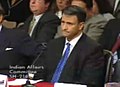 American lobbyist and businessman Jack Abramoff was at the center of an extensive corruption investigation. (from Political corruption)
 -
 Candlelight protest against South Korean President Park Geun-hye in Seoul, South Korea, 7 January 2017 (from Political corruption)
 -

-
 Countries with politicians, public officials or close associates implicated in the Panama Papers leak on April 15, 2016 (from Political corruption)
 -
 Reformers like the American Joseph Keppler depicted the Senate as controlled by the giant moneybags, who represented the nation's financial trusts and monopolies. (from Political corruption)
 -
 The logo and slogan for change.org (from Politics and technology)
 -
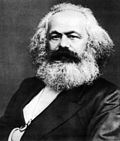 Karl Marx and his theory of Communism, developed with Friedrich Engels, proved to be one of the most influential political ideologies of the 20th century. (from History of political thought)
 -
 Sir Halford Mackinder's Heartland concept showing the situation of the "pivot area" established in the Theory of the Heartland. He later revised it to mark Northern Eurasia as a pivot while keeping area marked above as Heartland. (from Geopolitics)
 -
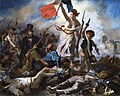 Eugène Delacroix's Liberty Leading the People (1830, Louvre), a painting created at a time where old and modern political philosophies came into violent conflict. (from History of political thought)
 -
 World map with the concepts of Heartland and Rimland applied (from Geopolitics)
 -
 The Flag of the United Nations flying at United Nations Plaza in the Civic Center, San Francisco, California. The UN is one of the key organizations in the process of the political globalization. (from Political globalization)
 -

-
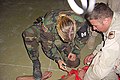 US Military Police officer restraining and sedating prisoner while a soldier holds him down (from Political corruption)
 -
 Savka Dabčević-Kučar, Croatian Spring participant; Europe's first female prime minister (from Civil and political rights)
 -
 Ferdinand Marcos (pictured with his daughter Imee) was a Philippine dictator and kleptocrat. His regime was infamous for its corruption. (from Political corruption)
 -
 Russia handing over the symbolic relay baton for the hosting rights of the 2022 FIFA World Cup to Qatar in June 2018 (from Political corruption)
 -
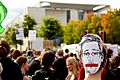 Protesters in support of American whistleblower Edward Snowden, Berlin, Germany, 30 August 2014 (from Political corruption)
 -
 Division of the world according to Haushofer's pan-regions doctrine (from Geopolitics)
 -

-
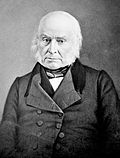 The sixth president of the United States, John Quincy Adams' "corrupt bargain" of 1824 is an example of patronage. (from Political corruption)
 -
 Malaysia's former Prime Minister Najib Razak was found guilty in the corruption trial over the multi-billion-dollar 1MDB scandal. He is currently serving his sentence in Kajang Prison. (from Political corruption)
 -
 Montenegro's former president Milo Đukanović is often described as having strong links to Montenegrin mafia. (from Political corruption)
 -
-
 This is the divide of the different political parties in Estonia where in the 2013 elections, over 133,000 people (roughly 21.2% of participating voters) voted over the Internet. The 2013 elections were also the first elections to allow vote verification with mobile devices. (from Politics and technology)
 -

-
 Elizabeth Warren and Bernie Sanders campaigning for extended US Medicare coverage in 2017. (from Health politics)
 -
 Detail from Corrupt Legislation (1896) by Elihu Vedder. Library of Congress Thomas Jefferson Building, Washington, D.C. (from Political corruption)
 -
 A memorial to the Great Famine (Ireland), a famine event in Ireland that faced elongated suffering from the UK's domestic policy failures at the time under the Prime Ministers Sir Robert Peel and Lord John Russell. (from Health politics)


.jpeg?lang=en)


_(2).jpg?lang=en)


,_%C3%A9crivain_et_homme_politique_-_P1679_-_Mus%C3%A9e_Carnavalet.jpg?lang=en)
.jpg?lang=en)


Related portals


Associated Wikimedia
The following Wikimedia Foundation sister projects provide more on this subject:
-
 Commons
Free media repository -
 Wikibooks
Free textbooks and manuals -
 Wikidata
Free knowledge base -
 Wikinews
Free-content news -
 Wikiquote
Collection of quotations -
 Wikisource
Free-content library -
 Wikiversity
Free learning tools -
 Wiktionary
Dictionary and thesaurus


