


Portal:Architecture

The Architecture Portal

Architecture is the art and technique of designing and building, as distinguished from the skills associated with construction. It is both the process and the product of sketching, conceiving, planning, designing, and constructing buildings or other structures. The term comes from Latin architectura; from Ancient Greek ἀρχιτέκτων (arkhitéktōn) 'architect'; from ἀρχι- (arkhi-) 'chief' and τέκτων (téktōn) 'creator'. Architectural works, in the material form of buildings, are often perceived as cultural symbols and as works of art. Historical civilizations are often identified with their surviving architectural achievements.
Architecture began as rural, oral vernacular architecture that developed from trial and error to successful replication. Ancient urban architecture was preoccupied with building religious structures and buildings symbolizing the political power of rulers until Greek and Roman architecture shifted focus to civic virtues. Indian and Chinese architecture influenced forms all over Asia and Buddhist architecture in particular took diverse local flavors. During the Middle Ages, pan-European styles of Romanesque and Gothic cathedrals and abbeys emerged while the Renaissance favored Classical forms implemented by architects known by name. Later, the roles of architects and engineers became separated.
Modern architecture began after World War I as an avant-garde movement that sought to develop a completely new style appropriate for a new post-war social and economic order focused on meeting the needs of the middle and working classes. Emphasis was put on modern techniques, materials, and simplified geometric forms, paving the way for high-rise superstructures. Many architects became disillusioned with modernism which they perceived as ahistorical and anti-aesthetic, and postmodern and contemporary architecture developed. Over the years, the field of architectural construction has branched out to include everything from ship design to interior decorating. (Full article...)
 Featured articles -

-

The St. Michael's Golden-Domed Monastery is a monastery in Kyiv, the capital of Ukraine, dedicated to Saint Michael the Archangel. It is located on the edge of the bank of the Dnipro river, to the northeast of the Saint Sophia Cathedral. The site is in the historical administrative neighbourhood of Upper Town and overlooks Podil, the city's historical commercial and merchant quarter. The monastery has been the headquarters of the Orthodox Church of Ukraine since December 2018.
Built in the Middle Ages by the Kievan Rus' ruler Sviatopolk II Iziaslavych, the monastery comprises the cathedral church, the Refectory Church of the Holy Apostle and Evangelist John the Theologian, constructed in 1713, the Economic Gate, constructed in 1760, and the bell tower, which was added in the 1710s. The exterior of the structure was remodelled in the Ukrainian Baroque style during the 18th century; the interior retained its original Byzantine architecture. (Full article...) -
The Chicago Board of Trade Building is a 44-story, 604-foot (184 m) Art Deco skyscraper located in the Chicago Loop, standing at the foot of the LaSalle Street "canyon". Built in 1930 for the Chicago Board of Trade (CBOT), it has served as the primary trading venue of the CBOT and later the CME Group, formed in 2007 by the merger of the CBOT and the Chicago Mercantile Exchange. In 2012, the CME Group sold the CBOT Building to a consortium of real estate investors, including GlenStar Properties LLC and USAA Real Estate Company.
The CBOT has been located at the site since 1885. A building designed by William W. Boyington stood at the location from 1885 to 1929, being the tallest building in Chicago from its construction until its clock tower was removed in 1895. The Boyington building became unsound in the 1920s and was demolished in 1929, replaced by the current building designed by Holabird & Root. The current building was itself Chicago's tallest until 1965, when it was surpassed by the Richard J. Daley Center. (Full article...) -

St. Mary Redcliffe from the northwest
Bristol, the largest city in South West England, has an eclectic combination of architectural styles, ranging from the medieval to 20th century brutalism and beyond. During the mid-19th century, Bristol Byzantine, an architectural style unique to the city, was developed, and several examples have survived. Buildings from most of the architectural periods of the United Kingdom can be seen throughout Bristol. Parts of the fortified city and castle date back to the medieval era, as do some churches dating from the 12th century onwards. Outside the historical city centre there are several large Tudor mansions built for wealthy merchants. Almshouses and public houses of the same period survive, intermingled with areas of more recent development. Several Georgian-era squares were laid out for the enjoyment of the middle class. As the city grew, it merged with its surrounding villages, each with its own character and centre, often clustered around a parish church.
The construction of the city's Floating Harbour, taking in the wharves on the River Avon and Frome, provided a focus for industrial development and the growth of the local transport infrastructure. Key elements of which include the Isambard Kingdom Brunel designed Clifton Suspension Bridge and Temple Meads terminus; the latter served from 2002 to 2009 as the British Empire and Commonwealth Museum, but is now closed. The 20th century saw further expansion of the city, the growth of the University of Bristol and the arrival of the aircraft industry. During World War II, the city centre was extensively bombed in the Bristol Blitz. The redevelopment of shopping centres, office buildings, and the harbourside continues to this day. (Full article...) -
El Lissitzky (Russian: Эль Лиси́цкий, born Lazar Markovich Lissitzky Russian: Ла́зарь Ма́ркович Лиси́цкий, listen; 23 November [O.S. 11 November] 1890 – 30 December 1941) was a Russian and Soviet artist, active as a painter, illustrator, designer, printmaker, photographer, and architect. He was an important figure of the avant-garde, helping develop suprematism with his mentor, Kazimir Malevich, and designing numerous exhibition displays and propaganda works for the Soviet Union.
Lissitzky began his career illustrating Yiddish children's books in an effort to promote Jewish culture. He started teaching at the age of 15, maintaining his teaching career for most of his life. Over the years, he taught in a variety of positions, schools, and artistic media, spreading and exchanging ideas. He took this ethic with him when he worked with Malevich in heading the suprematist art group UNOVIS, when he developed a variant suprematist series of his own, Proun, and further still in 1921, when he moved to Weimar Republic. In his remaining years he brought significant innovation and change to typography, exhibition design, photomontage, and book design, producing critically respected works and winning international acclaim for his exhibition design. This continued until his deathbed, where in 1941 he produced one of his last works – a Soviet propaganda poster rallying the people to construct more tanks for the fight against Nazi Germany. (Full article...) -
Sir William Bruce of Kinross, 1st Baronet (c. 1630 – 1710), was a Scottish gentleman-architect, "the effective founder of classical architecture in Scotland," as Howard Colvin observes. As a key figure in introducing the Palladian style into Scotland, he has been compared to the pioneering English architects Inigo Jones and Christopher Wren, and to the contemporaneous introducers of French style in English domestic architecture, Hugh May and Sir Roger Pratt.
Bruce was a merchant in Rotterdam during the 1650s, and played a role in the Restoration of Charles II in 1659. He carried messages between the exiled king and General Monck, and his loyalty to the king was rewarded with lucrative official appointments, including that of Surveyor General of the King's Works in Scotland, effectively making Bruce the "king's architect". His patrons included John Maitland, 1st Duke of Lauderdale, the most powerful man in Scotland at that time, and Bruce rose to become a member of Parliament, and briefly sat on the Privy Council of Scotland. (Full article...) -

Architecture at Vkhutemas, book cover by El Lissitzky, 1927
Vkhutemas (Russian: Вхутемас, IPA: [fxʊtʲɪˈmas], acronym for Высшие художественно-технические мастерские Vysshiye Khudozhestvenno-Tekhnicheskiye Masterskiye "Higher Art and Technical Studios") was the Russian state art and technical school founded in 1920 in Moscow, replacing the Moscow Svomas.
The workshops were established by a decree from Vladimir Lenin with the intentions, in the words of the Soviet government, "to prepare master artists of the highest qualifications for industry, and builders and managers for professional-technical education". The school had 100 faculty members and an enrollment of 2,500 students. Vkhutemas was formed by a merger of two previous schools: the Moscow School of Painting, Sculpture and Architecture and the Stroganov School of Applied Arts. The workshops had artistic and industrial faculties; the art faculty taught courses in graphics, sculpture and architecture while the industrial faculty taught courses in printing, textiles, ceramics, woodworking, and metalworking. (Full article...) -
Bramall Hall is a largely Tudor manor house in Bramhall, Stockport, Greater Manchester, England. Its oldest parts date from the 14th century, with additions from the 16th and 19th centuries. It is a notable example of the timber-framed buildings found throughout the historic county of Cheshire. The house functions as a museum and its 70 acres (28 ha) of landscaped parkland (Bramhall Park) are open to the public.
The manor of Bramall was first described in the Domesday Book in 1086, when it was held by the Massey family. From the late 14th century, it was owned by the Davenports, who built the present house and remained lords of the manor for about 500 years. In 1877 they sold the estate of nearly 2,000 acres (810 ha) to the Manchester Freeholders' Company, a property company formed to exploit the estate's potential for residential building development. The hall and a residual park of over 50 acres (20 ha) was sold on by the Freeholders to the Nevill family of successful industrialists. (Full article...) -
Ieoh Ming Pei FAIA RIBA (/ˌjoʊ mɪŋ ˈpeɪ/ YOH ming PAY; Chinese: 貝聿銘; pinyin: Bèi Yùmíng; April 26, 1917 – May 16, 2019) was a Chinese-American architect. Born in Guangzhou into a Chinese family, Pei drew inspiration at an early age from the garden villas at Suzhou, the traditional retreat of the scholar-gentry to which his family belonged. In 1935, he moved to the United States and enrolled in the University of Pennsylvania's architecture school, but quickly transferred to the Massachusetts Institute of Technology. Unhappy with the focus on Beaux-Arts architecture at both schools, he spent his free time researching emerging architects, especially Le Corbusier.
After graduating from MIT, Pei enrolled in the Harvard Graduate School of Design (GSD) where he befriended faculty members Walter Gropius and Marcel Breuer, both of whom had formerly taught at the Bauhaus. (Full article...) -

Schematic map of Heian-kyō showing the location of the palace as well as the Tsuchimikado temporary palace that developed into the current Kyoto Imperial Palace (blue in upper right-hand corner)
The Heian Palace (平安宮, Heian-kyū) was the original imperial palace of Heian-kyō (present-day Kyoto), then the capital of Japan. Both the palace and the city were constructed in the late 700s and were patterned on Chinese models and designs. The palace served as the imperial residence and the administrative centre for most of the Heian period (794–1185).
Located in the north-central section of the city, the palace consisted of a large, walled, rectangular Greater Palace (the Daidairi), which contained several ceremonial and administrative buildings including the government ministries. Inside this enclosure was the separately walled residential compound of the emperor, or the Inner Palace (Dairi). In addition to the emperor's living quarters, the Inner Palace contained the residences of the imperial consorts and buildings more closely linked to the person of the emperor. (Full article...) -
The Pennsylvania State Capitol is the seat of government for the U.S. state of Pennsylvania located in downtown Harrisburg. The building was designed by architect Joseph Miller Huston in 1902 and completed in 1906 in a Beaux-Arts style with decorative Renaissance themes throughout. The capitol houses the legislative chambers for the Pennsylvania General Assembly, made up of the House of Representatives and the Senate, and the Harrisburg chambers for the Supreme and Superior Courts of Pennsylvania, as well as the offices of the Governor and the Lieutenant Governor. It is also the main building of the Pennsylvania State Capitol Complex.
The seat of government for the state was initially in Philadelphia, then was relocated to Lancaster in 1799 and finally to Harrisburg in 1812. The current capitol, known as the Huston Capitol, is the third state capitol building built in Harrisburg. The first, the Hills Capitol, was destroyed in 1897 by a fire. The second, the Cobb Capitol, was left unfinished when funding was discontinued in 1899. (Full article...) -

The City of Manchester Stadium, currently known as Etihad Stadium for sponsorship reasons, is the home of Premier League club Manchester City, with a domestic football capacity of 53,600, making it the 7th-largest football stadium in England and 11th-largest in the United Kingdom.
Built to host the 2002 Commonwealth Games, the stadium has since staged the 2008 UEFA Cup final, England football internationals, rugby league matches, a boxing world title fight, the England rugby union team's final group match of the 2015 Rugby World Cup and summer music concerts during the football off-season. (Full article...) -
Berthold Konrad Hermann Albert Speer (/ʃpɛər/; German: [ˈʃpeːɐ̯] ⓘ; 19 March 1905 – 1 September 1981) was a German architect who served as Minister of Armaments and War Production in Nazi Germany during most of World War II. A close friend and ally of Adolf Hitler, he was convicted at the Nuremberg trials and served 20 years in prison.
An architect by training, Speer joined the Nazi Party in 1931. His architectural skills made him increasingly prominent within the Party, and he became a member of Hitler's inner circle. Hitler commissioned him to design and construct structures, including the Reich Chancellery and the Nazi Party rally grounds in Nuremberg. In 1937, Hitler appointed Speer as General Building Inspector for Berlin. In this capacity he was responsible for the Central Department for Resettlement that evicted Jewish tenants from their homes in Berlin. In February 1942, Speer was appointed as Reich Minister of Armaments and War Production. Using misleading statistics, he promoted himself as having performed an armaments miracle that was widely credited with keeping Germany in the war. In 1944, Speer established a task force to increase production of fighter aircraft. It became instrumental in exploiting slave labor for the benefit of the German war effort. (Full article...) -

Belton House, south front
Belton House is a Grade I listed country house in the parish of Belton near Grantham in Lincolnshire, England, built between 1685 and 1687 by Sir John Brownlow, 3rd Baronet. It is surrounded by formal gardens and a series of avenues leading to follies within a larger wooded park. Belton has been described as a compilation of all that is finest of Carolean architecture, said to be the only truly vernacular style of architecture that England had produced since the Tudor period. It is considered to be a complete example of a typical English country house; the claim has even been made that Belton's principal façade was the inspiration for the modern British motorway signs which give directions to stately homes.
For about three centuries until 1984, Belton House was the seat of the Brownlow family, which had first acquired land in the area in the late 16th century. Their heirs, the Cust family, were created Baron Brownlow in 1776. Despite his great wealth Sir John Brownlow, 3rd Baronet, chose to build a comparatively modest house rather than one of the grand Baroque palaces being built by others at the time. The contemporary, if provincial, Carolean style was the selected choice of design. Nevertheless, the new house was fitted with the latest innovations, such as sash windows for the principal rooms, and followed the latest thinking on house-planning, in seeking to separate those parts of the building that were for the use of the family from the areas where servants carried out their domestic duties. Successive generations made changes to the interior of the house which reflected their changing social position and tastes, yet the fabric and design of the house changed little. (Full article...) -
The Alexander Hamilton U.S. Custom House (originally the New York Custom House) is a government building, museum, and former custom house at 1 Bowling Green, near the southern end of Manhattan in New York City, New York, United States. Designed by Cass Gilbert in the Beaux-Arts style, it was erected from 1902 to 1907 by the government of the United States as a headquarters for the Port of New York's duty collection operations. The building contains the George Gustav Heye Center museum, the United States Bankruptcy Court for the Southern District of New York, and the New York regional offices of the National Archives. The facade and part of the interior are New York City designated landmarks, and the building is listed on both the New York State Register of Historic Places and the National Register of Historic Places (NRHP) as a National Historic Landmark. It is also a contributing property to the Wall Street Historic District, listed on the NRHP.
The Custom House is a seven-story steel-framed structure with a stone facade and elaborate interiors. The exterior is decorated with nautical motifs and sculptures by twelve artists. The second through fourth stories contain colonnades with Corinthian columns. The main entrance consists of a grand staircase flanked by Four Continents, a set of four statues by Daniel Chester French. The second-story entrance vestibule leads to a transverse lobby, a rotunda, and offices. The rotunda includes a skylight and ceiling murals by Reginald Marsh. The George Gustav Heye Center, a branch of the National Museum of the American Indian, operates on the ground and second stories, while the upper stories contain U.S. government offices. (Full article...) -

Queen's Gate House, still commonly known by its previous name of Baden-Powell House, is a conference centre in South Kensington, London. It was built as a tribute to Lord Baden-Powell, the founder of Scouting, and has served as the headquarters for The Scout Association, as a hostel providing modern and affordable lodging for Scouts, Guides, their families and the general public staying in London and as a conference and event venue.
The building committee, chaired by Sir Harold Gillett, Lord Mayor of London, purchased the site in 1956, and assigned Ralph Tubbs to design the house in the modern architectural style. The foundation stone was laid in 1959 by World Chief Guide Olave, Lady Baden-Powell, and it was opened in 1961 by Queen Elizabeth II. The largest part of the £400,000 cost was provided by the Scout Movement itself and the building previously included a number of tributes to the founder including hosting a small exhibition about Scouting, and a granite statue of Baden-Powell by Don Potter located outside the building. (Full article...)

.jpg?lang=en)

.jpg?lang=en)


_(cropped).jpg?lang=en)

.jpg?lang=en)


.jpg?lang=en)

Selected article –
_(29721130342).jpg?lang=en)
Islamic architecture comprises the architectural styles of buildings associated with Islam. It encompasses both secular and religious styles from the early history of Islam to the present day. The Islamic world encompasses a wide geographic area historically ranging from western Africa and Europe to eastern Asia. Certain commonalities are shared by Islamic architectural styles across all these regions, but over time different regions developed their own styles according to local materials and techniques, local dynasties and patrons, different regional centers of artistic production, and sometimes different religious affiliations.
Early Islamic architecture was influenced by Roman, Byzantine, Iranian, and Mesopotamian architecture and all other lands which the early Muslim conquests conquered in the seventh and eighth centuries. Later it developed distinct characteristics in the form of buildings and in the decoration of surfaces with Islamic calligraphy, arabesques, and geometric motifs. New architectural elements like minarets, muqarnas, and multifoil arches were invented. Common or important types of buildings in Islamic architecture include mosques, madrasas, tombs, palaces, hammams (public baths), Sufi hospices (e.g. khanqahs or zawiyas), fountains and sabils, commercial buildings (e.g. caravanserais and bazaars), and military fortifications. (Full article...)
Featured lists -
-
This list of the tallest buildings and structures in Greater Manchester ranks buildings in Greater Manchester, England, by height. Greater Manchester is the second-most populous metropolitan area in the United Kingdom after Greater London, with a population of over 2.5 million. The region's tallest buildings are concentrated in central Manchester and the adjacent borough of Salford, which together form a single, continuous urban core along the River Irwell.
Since the late 2010s, central Manchester has experienced a major high-rise boom, with the number of buildings over 100 metres (330 ft) increasing from just four in 2017 to 26 by 2025. An additional six towers exceeding 100 metres are currently under construction. This represents the largest concentration of high-rises in any UK metropolitan area outside London. The tallest to date is the South Tower at Deansgate Square, completed in 2018 at 201 metres (659 ft), making it the tallest building in the UK outside London. (Full article...) -
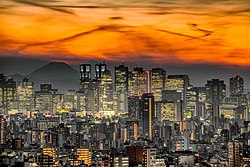
Tokyo is the most populated of Japan's 47 prefectures. Mainland Tokyo is divided into two sections: Western Tokyo and the special wards of Tokyo. The prefecture's tallest structures are within the 23 special wards, which comprise the area formerly incorporated as Tokyo City. As of May 2025, there are over 200 structures in Tokyo that stand at least 150 metres (490 ft) tall, of which 49 are at least 200 metres (660 ft) tall, including those that are still under construction but have been topped out. Most of these structures are buildings; however, there are other types of structures among the tallest in the prefecture, such as freestanding towers and incineration smokestacks.
The tallest structure in the prefecture is Tokyo Skytree, a megatall lattice tower that rises 634 metres (2,080 feet), which was completed in 2012. It also stands as the tallest structure in Japan, the tallest tower in the world, and the third-tallest freestanding structure in the world. The second-tallest structure in Tokyo is the 333-metre-tall (1,093-foot) Tokyo Tower, a lattice tower completed in 1958. The tallest building and third-tallest overall structure is the 325-metre-tall (1,066-foot) Azabudai Hills Mori JP Tower, completed in 2023 and being Tokyo's only supertall skyscraper. It is also the tallest building in Japan and the world's largest skyscraper by floor area. The second-tallest building and fourth-tallest structure is the 284-metre-tall (932-foot) Nihonbashi 1-Chōme Central District Redevelopment (tentative name), which is topped out and scheduled for completion in 2026. Including topped-out buildings, Tokyo is home to 17 of the 25 tallest freestanding structures and 18 of the 25 tallest buildings in Japan. (Full article...) -
Taunton Deane is a former local government district with borough status in the English county of Somerset. In the United Kingdom, the term listed building refers to a building or other structure officially designated as being of special architectural, historical or cultural significance; Grade I structures are those considered to be "buildings of exceptional interest". Listing was begun by a provision in the Town and Country Planning Act 1947. Once listed, severe restrictions are imposed on the modifications allowed to a building's structure or its fittings. In England, the authority for listing under the Planning (Listed Buildings and Conservation Areas) Act 1990 rests with Historic England, a non-departmental public body sponsored by the Department for Digital, Culture, Media and Sport; local authorities have a responsibility to regulate and enforce the planning regulations.
The district of Taunton Deane Area covers a population of approximately 100,000 in an area of 462 square kilometres (178 sq mi). It is centred on the town of Taunton, where around 60,000 of the population live and the council are based, and includes surrounding suburbs and villages. (Full article...) -
West Somerset is a former local government district in the English county of Somerset. In the United Kingdom, the term listed building refers to a building or other structure officially designated as being of special architectural, historical or cultural significance; Grade I structures are those considered to be "buildings of exceptional interest". Listing was begun by a provision in the Town and Country Planning Act 1947. Once listed, severe restrictions are imposed on the modifications allowed to a building's structure or its fittings. In England, the authority for listing under the Planning (Listed Buildings and Conservation Areas) Act 1990 rests with Historic England, a non-departmental public body sponsored by the Department for Digital, Culture, Media and Sport; local authorities have a responsibility to regulate and enforce the planning regulations.
The district of West Somerset covers a largely rural area, with a population, according to the 2011 census, of 35,300 in an area of 740 square kilometres (290 sq mi). The largest centres of population are the coastal towns of Minehead and Watchet. The council's administrative headquarters are in the village of Williton. (Full article...) -
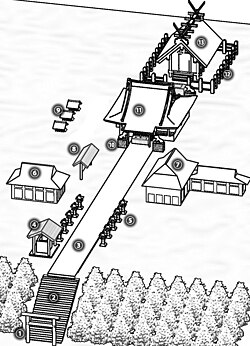
General layout of a Shinto shrine: 1. Torii, 2. Stone stairs, 3. Sandō, 4. Chōzuya or Temizuya, 5. Tōrō, 6. Kagura-den (building dedicated to Noh or the sacred Kagura dance), 7. Shamusho (administration office), 8. Ema, 9. Sessha/massha, 10. Komainu, 11. Haiden, 12. Tamagaki, 13. Honden
The number of Shinto shrines in Japan today has been estimated at more than 150,000. Single structure shrines are the most common. Shrine buildings might also include oratories (in front of main sanctuary), purification halls, offering halls called heiden (between honden and haiden), dance halls, stone or metal lanterns, fences or walls, torii and other structures. The term "National Treasure" has been used in Japan to denote cultural properties since 1897.
The definition and the criteria have changed since the inception of the term. The shrine structures in this list were designated national treasures when the Law for the Protection of Cultural Properties was implemented on June 9, 1951. As such they are eligible for government grants for repairs, maintenance and the installation of fire-prevention facilities and other disaster prevention systems. Owners are required to announce any changes to the National Treasures such as damage or loss and need to obtain a permit for transfer of ownership or intended repairs. The items are selected by the Ministry of Education, Culture, Sports, Science and Technology based on their "especially high historical or artistic value". This list presents 43 entries of national treasure shrine structures from 12th-century Classical Heian period to the early modern 19th-century Edo period. The number of structures listed is actually more than 43, because in some cases groups of related structures are combined to form a single entry. The structures include main halls (honden), oratories (haiden), gates, offering halls (heiden), purification halls (haraedono) and other structures associated with shrines. (Full article...) -

Eastgate Clock designed by Douglas and erected on Chester's Eastgate in 1899 to commemorate Queen Victoria's Diamond Jubilee
John Douglas (1830–1911) was an English architect based in Chester, Cheshire. His designs included new churches, alterations to and restoration of existing churches, church furnishings, new houses and alterations to existing houses. He also designed a variety of other buildings, including shops, banks, offices, schools, memorials and public buildings. His architectural styles were eclectic, but as he worked during the period of the Gothic Revival, much of his work incorporates elements of the English Gothic style. Douglas is probably best remembered for his incorporation of vernacular elements in his buildings, especially half-timbering. Of particular importance is Douglas' use of joinery and highly detailed wood carving.
Douglas was born in the Cheshire village of Sandiway and was articled to the Lancaster architect E. G. Paley, later becoming his chief assistant. He established an office in Chester in either 1855 or 1860, from where he practised throughout his career. Initially he ran the office himself but in 1884 he appointed a former assistant, Daniel Porter Fordham, as a partner. When Fordham retired in 1897, he was succeeded by Charles Howard Minshull. In 1909 this partnership was dissolved and Douglas ran the office alone until his death in 1911. As his office was in Chester, most of his work was carried out in Cheshire and North Wales, although some was further afield in regions including Merseyside, Greater Manchester, and Shropshire. (Full article...) -

Bath and North East Somerset shown within Somerset and England
Bath and North East Somerset (commonly referred to as BANES or B&NES) is a unitary authority created on 1 April 1996, following the abolition of the County of Avon, which had existed since 1974. Part of the ceremonial county of Somerset, Bath and North East Somerset occupies an area of 220 square miles (570 km2), two-thirds of which is green belt. It stretches from the outskirts of Bristol, south into the Mendip Hills and east to the southern Cotswold Hills and Wiltshire border. The city of Bath is the principal settlement in the district, but BANES also covers Keynsham, Midsomer Norton, Radstock and the Chew Valley. The area has a population of 170,000, about half of whom live in Bath, making it 12 times more densely populated than the rest of the area.
In the United Kingdom, the term listed building refers to a building or other structure officially designated as being of special architectural, historical, or cultural significance; Grade I structures are those considered to be "buildings of exceptional interest". Listing was begun by a provision in the Town and Country Planning Act 1947. Once listed, strict limitations are imposed on the modifications allowed to a building's structure or fittings. In England, the authority for listing under the Planning (Listed Buildings and Conservation Areas) Act 1990 rests with Historic England, a non-departmental public body sponsored by the Department for Digital, Culture, Media and Sport; local authorities have a responsibility to regulate and enforce the planning regulations. (Full article...) -

Charles Holden by Benjamin Nelson, 1910
Charles Holden (12 May 1875 – 1 May 1960) was an English architect best known for designing many London Underground stations during the 1920s and 1930s. Other notable designs were Bristol Central Library, the Underground Electric Railways Company of London's headquarters at 55 Broadway and the University of London's Senate House. Many of his buildings have been granted listed building status, indicating that they are considered to be of architectural or historical interest and protecting them from unapproved alteration. He also designed over 60 war cemeteries and two memorials in Belgium and northern France for the Imperial War Graves Commission from 1920 to 1928.
Holden's early architectural training was in Bolton and Manchester where he worked for architects Everard W. Leeson and Jonathan Simpson before moving to London. After a short period with Arts and Crafts designer Charles Robert Ashbee, he went to work for Henry Percy Adams in 1899. He became Adams' partner in the firm in 1907 and remained with it for the rest of his career. (Full article...) -
The U.S. state of Rhode Island is home to 27 buildings over 175 feet (53 m) in height. Five of these buildings are taller than 300 feet (91 m), all of which are located in the state's capital and largest city, Providence.
The tallest skyscraper in the city and state is the Industrial National Bank Building at 111 Westminster Street in Downtown Providence, which rises 26 floors and 428 feet (130 m). The Industrial National Bank Building, nicknamed the "Superman Building" due to its resemblance to the fictional Daily Planet building from the 1950s TV series, Adventures of Superman, is also the sixth-tallest building in New England outside of Boston. The second-tallest building in Providence is One Financial Plaza, which rises 30 floors and 410 feet (125 m) and was completed in 1973. (Full article...) -
There are 27 scheduled monuments in Maidstone, Kent, England. In the United Kingdom, a scheduled monument is an archaeological site or historic building of "national importance" that has been given protection against unauthorised change by being placed on a list (or "schedule") by the Secretary of State for Digital, Culture, Media and Sport; Historic England takes the leading role in identifying such sites. Scheduled monuments are defined in the Ancient Monuments and Archaeological Areas Act 1979 and the National Heritage Act 1983. They are also referred to as scheduled ancient monuments. There are about 20,000 scheduled monument entries on the list and more than one site can be included in a single entry. While a scheduled monument can also be recognised as a listed building, Historic England considers listed building status as a better way of protecting buildings than scheduled monument status. If a monument is considered by Historic England to "no longer merit scheduling" it can be removed from the schedule.
The borough of Maidstone is a local government district in the English county of Kent. The Maidstone district covers a largely rural area of 152 square miles (394 km2) between the North Downs and the Weald with the town of Maidstone, the county town of Kent, in the north-west. The district had a population of approximately 166,400 in 2016. The monuments range in date from a Neolithic standing stone to a tiny 18th-century mortuary, but the majority are medieval. (Full article...) -

Norman doorway in the undercroft of Norton Priory, built in local red sandstone
Runcorn is an industrial town in Halton, Cheshire, England, on the south bank of the River Mersey where it narrows at Runcorn Gap. In the town are the 61 buildings that are recorded in the National Heritage List for England as designated listed buildings in the current urban area of Runcorn, including the districts of Runcorn, Halton, Weston, Weston Point, and Norton. Two of these are classified as being in Grade I, nine in Grade II*, and 51 in Grade II.
In the United Kingdom, the term "listed building" refers to a building or other structure officially designated as being of special architectural, historical or cultural significance. These buildings are in three grades: Grade I consists of buildings of outstanding architectural or historical interest; Grade II* includes particularly significant buildings of more than local interest; Grade II consists of buildings of special architectural or historical interest. Buildings in England are listed by the Secretary of State for Culture, Media and Sport on recommendations provided by English Heritage, which also determines the grading. (Full article...) -

John Douglas in late middle age
John Douglas (1830–1911) was an English architect based in Chester, Cheshire. His output included new churches, alterations to and restoration of existing churches, church furnishings, new houses and alterations to existing houses, and a variety of other buildings, including shops, banks, offices, schools, memorials and public buildings. His architectural styles were eclectic, but as he worked during the period of the Gothic Revival, much of his work incorporates elements of the English Gothic style. Douglas is probably best remembered for his incorporation of vernacular elements in his buildings, in particular half-timbering. Of particular importance to Douglas' church furniture is his use of joinery and highly detailed wood carving.
John Douglas was born in the Cheshire village of Sandiway and was articled to the Lancaster architect E. G. Paley, later becoming his chief assistant. He established an office in Chester in either 1855 or 1860, from where he practised throughout his career. Initially he ran the office himself but in 1884 he appointed his assistant, Daniel Porter Fordham, as a partner. When Fordham retired in 1897, he was succeeded by Charles Howard Minshull. In 1909 this partnership was dissolved and Douglas ran the office alone until his death in 1911. As his office was in Chester, most of his works were in Cheshire and North Wales, although some were further afield, in Lancashire, Staffordshire, Warwickshire, and Scotland. (Full article...) -
There are 42 Grade I listed buildings in Maidstone. The Borough of Maidstone is a local government district in the English county of Kent. The district covers a largely rural area of 152 square miles (394 km2) between the North Downs and the Weald with the town of Maidstone, the county town of Kent, in the north-west. The district has a population of approximately 166,400 in 2016.
In the United Kingdom, the term listed building refers to a building or other structure officially designated as being of special architectural, historical or cultural significance; Grade I structures are those considered to be "buildings of exceptional interest". Listing was begun by a provision in the Town and Country Planning Act 1947. Once listed, severe restrictions are imposed on the modifications allowed to a building's structure or its fittings. In England, buildings are given listed building status by the Secretary of State for Culture, Media and Sport, acting on the recommendation of Historic England. (Full article...) -
San Francisco, a major city in the U.S state of California, has over 480 high-rises, 124 of which are at least 300 feet (91 m) tall as of 2025. The tallest building in the city is Salesforce Tower, a supertall skyscraper completed in 2018 at a height of 1,070 ft (326.1 m). It is the 18th-tallest building in the United States and the second tallest in California. San Francisco has one of the largest skylines in the Western United States. It has the second most skyscrapers taller than 492 ft (150 m) in California, with 26, after Los Angeles. When ranked by buildings that reach 300 ft (91 m), San Francisco has more skyscrapers than Los Angeles, and is tied with Atlanta as having the fifth-most in the United States, after New York City, Chicago, Miami, and Houston.
The history of skyscrapers in San Francisco began with the 218-foot (66 m), ten-story Chronicle Building, which was completed in 1890. During the 1920s, San Francisco underwent one of the largest pre-war skyscraper booms in the United States, constructing ten structures greater than 300 ft (91 m), including the Telephone Building and the Russ Building. The Great Depression and World War II halted skyscraper development for two decades until the 1950s. Many of San Francisco's tallest buildings, particularly its office skyscrapers, were built in a major construction boom between the 1960s and the late 1980s. This included the iconic Transamerica Pyramid in 1972, which rises to 853 feet (260 m). (Full article...) -
London, the capital and largest city of the United Kingdom, has 128 completed buildings that are at least 100 metres (328 feet) tall as of 2025, 42 of which have a height greater than 150 metres (492 ft). London has one of the largest skylines in Europe; it has the most skyscrapers taller than 150 m (492 ft) in the United Kingdom and in Western Europe, and the third most of any city in Europe overall, after Moscow and Istanbul. London's skyline has undergone immense transformation in the early 21st century. Since 2013, the tallest building in London and the United Kingdom has been The Shard, the only supertall skyscraper. The pyramid-shaped building in Southwark rises to a height of 306 m (1,004 ft). London has two primary skyscraper clusters: the City of London in central London, and Canary Wharf with the Isle of Dogs in East London, alongside numerous smaller groupings throughout Greater London.
For two centuries since 1710, St Paul's Cathedral was the tallest structure in London. While early skyscrapers sprouted in the late 19th and early 20th century in the United States, London—then the world's largest city—avoided this trend. In 1894, after work on the 12-storey Queen Anne’s Mansions, the London Building Act imposed a height limit of 30 m (98 ft) or less across the city. This restriction was lifted in the 1950s, permitting the construction of high-rises taller than St. Paul's. The destruction during The Blitz allowed more room for modern development. Early skyscrapers were built on the west side of central London, most notably the BT Tower in Fitzrovia in 1965. A concentration of tall buildings arose in the City of London, including office towers such as St Helen's and Tower 42, and Barbican Estate, a three-towered residential complex that is a prominent example of brutalism. The London Docklands in the Isle of Dogs, which had become disused in the 1960s, underwent a significant redevelopment plan in the 1980s, resulting in the financial district of Canary Wharf. Among the first skyscrapers built there was One Canada Square in 1991. At 236 m (774 ft), it surpassed Tower 42 to be London's tallest building; it is currently the city's third-tallest building and still the tallest in Canary Wharf. (Full article...)


.jpg?lang=en)


 Good articles -

-
The Cathedral of the Immaculate Conception (Chinese: 聖母無原罪主教座堂) is a late 19th-century English Gothic Revival church that serves as the cathedral of the Diocese of Hong Kong, which is effectively coterminous with the territory. It is located at 16 Caine Road, in the Mid-Levels area on the northern shore of Hong Kong Island.
Groundbreaking and construction of the cathedral began in 1883 after the previous cathedral, on Wellington Street at its junction with Pottinger Street, was destroyed by fire. Built from brick and stone, the new cathedral was designed by the London-based architectural firm Crawley and Company. The church opened on 7 December 1888, the day before the Feast of the Immaculate Conception, and was consecrated in 1938. Three years later, it was damaged during the Battle of Hong Kong, but remained untouched throughout the subsequent Japanese occupation which lasted until 1945. At the turn of the century, the cathedral underwent an extensive and costly programme of refurbishment, which was completed in 2002. The cathedral is listed as a Grade I historic building by the Antiquities and Monuments Office of the Hong Kong Government and the Antiquities Advisory Board. (Full article...) -
Berkhamsted Castle is a Norman motte-and-bailey castle in Berkhamsted, Hertfordshire. The castle was built to obtain control of a key route between London and the Midlands during the Norman conquest of England in the 11th century. Robert of Mortain, William the Conqueror's half brother, was probably responsible for managing its construction, after which he became the castle's owner. The castle was surrounded by protective earthworks and a deer park for hunting. The castle became a new administrative centre of the former Anglo-Saxon settlement of Berkhamsted. Subsequent kings granted the castle to their chancellors. The castle was substantially expanded in the mid-12th century, probably by Thomas Becket.
The castle was besieged in 1216 during the civil war between King John and rebellious barons, who were supported by France. It was captured by Prince Louis, the future Louis VIII, who attacked it with siege engines for twenty days, forcing the garrison to surrender. After being retaken by royal forces the subsequent year, it was given to Richard, Earl of Cornwall, beginning a long association with the Earldom of Cornwall and the later duchy. Richard redeveloped the castle as a palatial residence, and made it the centre of the earldom's administration. King Edward III further developed the castle in the 14th century and gave it to his son, Edward, the Black Prince, who expanded the hunting grounds. The castle was also used to hold royal prisoners, including King John II of France and rival claimants to the English throne. (Full article...) -

The National Police Memorial is a memorial in central London, commemorating about 4,000 police officers killed in the course of their duties in the United Kingdom. It was designed by Lord Foster of Thames Bank and Per Arnoldi and unveiled in 2005. The project architect for Foster was Peter Ridley. (Full article...) -
The College of All Saints was an ecclesiastical college in Maidstone, Kent, England, founded in 1395 by Archbishop Courtenay. It was part of the establishment of the nearby Archbishop's Palace, but was closed in 1546. The College church was the neighbouring Church of All Saints. Following its closure, the College estate was sold. The buildings and land passed through the ownership of three aristocratic families, being farmed until the late 19th century. A number of the College's buildings survive and all are listed buildings. Additionally, the whole site of the College is protected as a scheduled monument. (Full article...) -
El Presidio Real de Santa Bárbara, also known as the Royal Presidio of Santa Barbara, is a former military installation in Santa Barbara, California, United States. The presidio was built by Spain in 1782, with the mission of defending the Second Military District in California. In modern times, the Presidio serves as a significant tourist attraction, museum and an active archaeological site as part of El Presidio de Santa Barbara State Historic Park.
The park contains an original adobe structure called El Cuartel, which is the second oldest surviving building in California; only the chapel at Mission San Juan Capistrano, known as "Father Junípero Serra's Church", is older. The Presidio of Santa Barbara has the distinction of being the last military outpost built by Spain in the New World. The Presidio became a California Historical Landmark in 1958 and was listed on the U.S. National Register of Historic Places in 1973. (Full article...) -
Caludon Castle is a Scheduled Ancient Monument and Grade I listed building in Coventry, in the West Midlands of England. A second moated site 190 metres (620 ft) to the south is a Scheduled Ancient Monument in its own right. The castle is now a ruin, and all that remains is a large fragment of sandstone wall. What remains of the estate is now an urban park, owned and run by Coventry City Council, but much of it was sold and developed into housing estates in the early 20th century.
The site has been occupied since at least the 11th century CE. The original building, pre-dating the Norman conquest of England, was a large house, which became the property of the Earl of Chester after the conquest. The house was given to the Segrave family in the 13th century, and was first described as a manor in 1239. A licence for crenellation was granted in 1305, at which point the house is thought to have been re-styled as a castle. Another licence was received in 1354, and the property was again rebuilt. In the 14th century, it came into the possession of Thomas de Mowbray, 1st Duke of Norfolk, who was banished in 1398, after which the castle fell into disrepair. Mowbray's son, John, inherited the building, and it remained in the Mowbray family until 1481, when it passed to William de Berkeley, 1st Marquess of Berkeley. It was rebuilt again circa 1580, this time as a mansion, having lain derelict since Mowbray's banishment. The castle was all but destroyed in 1662, and remained in ruins until 1800, when the remains were used in the construction of a farmhouse on the site. (Full article...) -
Longtown Castle, also termed Ewias Lacey Castle in early accounts, is a ruined Norman motte-and-bailey fortification in Longtown, Herefordshire. It was established in the 11th century by Walter de Lacy, reusing former Roman earthworks. The castle was then rebuilt in stone by Gilbert de Lacy after 1148, who also established the adjacent town to help pay for the work. By the 14th century, Longtown Castle had fallen into decline. Despite being pressed back into use during the Owain Glyndŵr rising in 1403, it fell into ruin. In the 21st century the castle is maintained by English Heritage and operated as a tourist attraction. (Full article...) -
Halton Castle is a castle in the village of Halton, part of the town of Runcorn, Cheshire, England. The castle is on the top of Halton Hill, a sandstone prominence overlooking the village. The original building, a motte-and-bailey castle began in 1071, was replaced with the current sandstone castle in the 13th century. Building alterations continued until at least 1609, when the structure is recorded as in disrepair. The castle is recorded in the National Heritage List for England as a designated Grade I listed building, and a scheduled monument.
It was the seat of the Barons of Halton from the 11th century until the 14th century, then passed to the Duchy of Lancaster. It was besieged twice in the Civil War after which its structure deteriorated. In the 18th century a new courthouse was built on the site of the previous gatehouse. The castle lies in ruins apart from the courthouse which has been converted into a public house. (Full article...) -
The original World Trade Center (WTC) was a complex of seven buildings in the Financial District of Lower Manhattan in New York City. Built primarily between 1966 and 1975, it was dedicated on April 4, 1973, and was destroyed on September 11, 2001. The complex included the 110-story-tall Twin Towers, at the time of their completion the tallest buildings in the world, with the original 1 World Trade Center (the North Tower) at 1,368 feet (417 m), and 2 World Trade Center (the South Tower) at 1,362 feet (415.1 m); they were also the tallest twin skyscrapers in the world until 1996, when the Petronas Towers opened in Kuala Lumpur, Malaysia. The other buildings in the complex were the Marriott World Trade Center (3 WTC), 4 WTC, 5 WTC, 6 WTC, and 7 WTC. The complex contained 13,400,000 square feet (1,240,000 m2) of office space and, prior to its completion, was projected to accommodate an estimated 130,000 people.
The core complex cost about $400 million (equivalent to $2.37 billion in 2024). David Rockefeller suggested the construction of a large office building complex to help stimulate urban renewal in Lower Manhattan, and his brother Nelson, then New York's 49th governor, signed the legislation to build it. The buildings at the complex were designed by Minoru Yamasaki. In 1998, the Port Authority of New York and New Jersey decided to privatize it by leasing the buildings to a private company to manage. It awarded the lease to Silverstein Properties in July 2001. During its existence, the World Trade Center symbolized globalization and the economic power and prosperity of the United States. Although its design was initially criticized by New Yorkers and architectural critics, the Twin Towers became an icon of New York City. It had a major role in popular culture, and according to one estimate was depicted in 472 films. The Twin Towers were also used in Philippe Petit's tightrope-walking performance on August 7, 1974. Following the September 11 attacks, mentions of the complex in various media were altered or deleted, and several dozen "memorial films" were created. (Full article...) -
The Arbor Hill Historic District–Ten Broeck Triangle, originally the Ten Broeck Historic District, is a seven-block area located within the Arbor Hill neighborhood north of what is today downtown Albany, New York, United States. In 1979 its easternmost third, the Ten Broeck Triangle, the second oldest residential neighborhood in the city, was recognized as a historic district and listed on the National Register of Historic Places. Four years later, the district was increased to its current size and renamed to reflect its expansion to include some of the rest of Arbor Hill.
The future district was first established by its oldest contributing property, the Ten Broeck Mansion, built at the end of the 18th century by a prominent local family. It lent its name to the Ten Broeck Triangle, established in the middle of the following century when successful businessmen, primarily lumber dealers, built large houses along Ten Broeck Avenue with the fortunes they had made from trade on the Erie Canal. It was one of the first neighborhoods to develop north of the city's downtown as it grew during the 19th century. (Full article...) -
The Édifice Price (English: Price Building) is an 18-floor (originally 16) skyscraper in Quebec City, Quebec, Canada. Built in 1928–1930 amid controversy for Price Brothers Limited, it is the tallest building in the Old Quebec historical district, as well as one of the oldest skyscrapers in Canada. The building is the property of Ivanhoé Cambridge, a subsidiary of the Caisse de dépôt et placement du Québec. A memorial is attached to the building. In 2001, it became the location of an official residence for the Premier of Quebec, which occupies two of the upper floors. (Full article...) -

The Isidore H. Heller House is a house at 5132 South Woodlawn Avenue in the Hyde Park neighborhood of Chicago in Illinois, United States. Constructed in 1896 for the family of the merchant Isidore H. Heller, the house was designed by American architect Frank Lloyd Wright. The design is credited as one of the turning points in Wright's shift to geometric, Prairie School architecture, which is defined by horizontal lines, flat or hipped roofs with broad overhanging eaves, windows grouped in horizontal bands, and an integration with the landscape, which is meant to evoke native Prairie surroundings.
The work demonstrates Wright's shift away from emulating the style of his mentor, Louis Sullivan. The facade is made of brick and is topped by a roof with a raised monitor section. Richard Bock, a Wright collaborator and sculptor, provided some of the ornamentation, including a plaster frieze. The house's first floor includes a living room, dining room, kitchen, and pantry, arranged around a stair and elevator. The second floor was devoted to bedrooms and bathrooms, while the third floor (originally used as servants' quarters and a bedroom) has been split into its own apartment. (Full article...) -
The Baths of Zeuxippus were popular public baths in the city of Constantinople. The origin of their name was disputed already in antiquity and could go back either to the god Zeus or to the artist Zeuxis. Constructed between 100 and 200, the Baths of Zeuxippus were destroyed during the Nika revolt of 532 and then rebuilt several years later. They were famed primarily for the many statues inside them, representing prominent individuals from history and mythology. (Full article...)
-
The Sycamore Historic District is a meandering area encompassing 99 acres (400,000 m2) of the land in and around the downtown of the DeKalb County, Illinois county seat, Sycamore. The area includes historic buildings and a number of historical and Victorian homes. Some significant structures are among those located within the Historic District including the DeKalb County Courthouse and the Sycamore Public Library. The district has been listed on the National Register of Historic Places since May 2, 1978.
There are over 200 properties within the irregular boundaries of the Sycamore Historic District. Of those, 187 are considered contributing properties to the historic district, and 22 are non-contributing. Of all of the district's homes and buildings 75% fit within the historic district concept. Some of the major structures include several prominent Queen Anne style mansions, the Sycamore library, the DeKalb County Courthouse, and dozens of mid- to late 19th-century houses. (Full article...) -
108 North State Street, often referred to as Block 37, is a shopping mall and development situated in the Loop area of downtown Chicago, Illinois. This site is defined by the square block bordered by West Randolph Street, North State Street, West Washington Street, and North Dearborn Street, originally designated as one of the city's 58 blocks. While the above-ground redevelopment has been finished, construction on an underground station was halted, leaving it only partially completed.
The previous buildings on the block were demolished in 1989 for a hotly contested redevelopment plan under the then Chicago Mayor Richard M. Daley. The debates included the demolition of the Chicago Landmark McCarthy Building, which proceeded after the Illinois Supreme Court decided private preservation groups did not have standing to challenge the city's decision. (Full article...)


-L1006716.jpg?lang=en)


.JPG?lang=en)
_(modified_version_with_desaturated_towers).jpg?lang=en)


.jpg?lang=en)


General images –
-
 Church of Santa Engrácia, Lisbon (now National Pantheon of Portugal; begun 1681) (from Baroque architecture)
 -
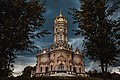 Znamenskaya Church (Dubrovitsy) 1690-1698 Podolsk, Moscow (from Baroque architecture)
 -
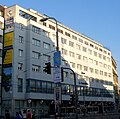 Obchodný a obytný dom Luxor (Residential and Commercial House Luxor), 1937, in Bratislava (Slovakia) (from Functionalism (architecture))
 -
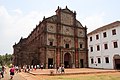 Basilica of Bom Jesus, Goa, India, completed in 1604 AD. It holds the body of St. Francis Xavier. (from Baroque architecture)
 -
 In Norway: wood and elevated-level (from Architecture)
 -

-
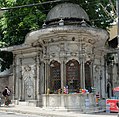 Sebil of Abdülhamid I, Istanbul (circa 1780) (from Baroque architecture)
 -

-
 Church of Our Saviour, Copenhagen (1682–1747) (from Baroque architecture)
 -
 Chapel of the Holy Shroud, Turin (from Baroque architecture)
 -
 Södra Ängby, 1938 (from Functionalism (architecture))
 -

-
 In Ireland: Yola hut (from Architecture)
 -
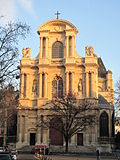 The Church of St-Gervais-et-St-Protais, the first Paris church with a façade in the new Baroque style (1616–20) (from Baroque architecture)
 -
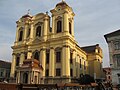
-
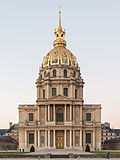 The dome of Les Invalides, Paris (from Baroque architecture)
 -

-

-
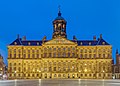
-
 Saints Peter and Paul Church, Kraków, Poland by Giovanni Maria Bernardoni (1597–1619) (from Baroque architecture)
 -
 Body plan of a ship showing the hull form (from Architecture)
 -
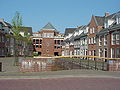
-
 In adding the dome to the Florence Cathedral (Italy) in the early 15th century, the architect Filippo Brunelleschi not only transformed the building and the city, but also the role and status of the architect. (from Architecture)
 -
 Beurs van Berlage in Amsterdam, 1903 (Hendrik Petrus Berlage) rationalism was an important precursor of Dutch traditionalism (from Traditionalist School (architecture))
 -
 Façade of the Church of the Gesù Rome (consecrated 1584) (from Baroque architecture)
 -

-

-
 The Zwinger in Dresden by Matthäus Daniel Pöppelmann (1697–1716), reconstructed in the 1950s and 1960s, after the damage of World War II. (from Baroque architecture)
 -
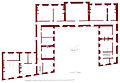 Plan of the second floor (attic storey) of the Hôtel de Brionne in Paris – 1734. (from Architecture)
 -
 Troja Palace, Prague (1679–1691) (from Baroque architecture)
 -
 Charles Rennie Mackintosh – Music Room 1901 (from Architecture)
 -
 Zlín in the Czech Republic (from Functionalism (architecture))
 -

-
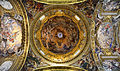 Interior view of dome of the Church of the Gesù by Giacomo Barozzi da Vignola, and Giacomo della Porta (from Baroque architecture)
 -
 Interior of the Basilica and Convent of Nossa Senhora do Carmo, Recife, Brazil, built between 1665 and 1767 (from Baroque architecture)
 -
 Bauhaus building (Germany). The Bauhaus style co-started modernist architecture. (from Architecture)
 -
 The Mexico City Metropolitan Cathedral built from 1573 to 1813. (from Baroque architecture)
 -
 Upper Belvedere Palace in Vienna (1721–23) (from Baroque architecture)
 -
-
 Typical railing, flat roof, stucco and colour detail in Nordic funkis (SOK warehouse and offices, 1938, Finland) (from Functionalism (architecture))
 -
 The tower of the Helsinki Olympic Stadium (Y. Lindegren & T. Jäntti, built in 1934–38) (from Functionalism (architecture))
 -
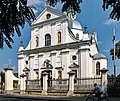 Corpus Christi Church, Grand Duchy of Lithuania (today Nyasvizh, Belarus), 1586 and 1593 (from Baroque architecture)
 -
-
 In Lesotho: rondavel stones (from Architecture)
.jpg?lang=en)
.jpg?lang=en)


_-_Front.jpg?lang=en)

.jpg?lang=en)
_De_Cotte_2503c_%E2%80%93_Gallica_2011_(adjusted).jpg?lang=en)


.jpg?lang=en)
.jpg?lang=en)


.JPG?lang=en)


.JPG?lang=en)
Did you know (auto-generated) -

- ... that Nancy S. Steinhardt completed her doctorate on medieval Chinese architecture before she was able to see any in person?
- ... that the architect of the Asakusa Culture Tourist Information Center thought of stacked nagaya houses while designing it?
- ... that the Seth Peterson Cottage was said to have "more architecture per square foot" than any of Frank Lloyd Wright's other designs?
- ... that 81 and 101 Willoughby Street were described as being one city block apart physically but "eons apart in their architecture"?
- ... that when Edgewood was built in Stanleytown, Virginia, its Greek Revival style was unknown to most people in the area?
- ... that the architects of the Eldridge Street Synagogue were Catholics who had never designed a synagogue before?
Related portals


Featured pictures -
-
-

-

-

-
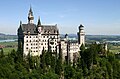 Castle Neuschwanstein, Germany (from Portal:Architecture/Castle images)
 -
 Flinders Street Station (1927), by Victoria State Transport Authority (from Portal:Architecture/Travel images)
 -
 Sparrenburg Castle, Bielefeld, Germany (from Portal:Architecture/Castle images)
 -
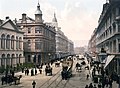 Royal Avenue, Belfast, Ireland (c.1890-1900) (from Portal:Architecture/Townscape images)
 -
-
 London King's Cross railway station departures concourse (from Portal:Architecture/Travel images)
 -
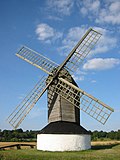 Pitstone-windmill (from Portal:Architecture/Industrial images)
 -

-
 Eiffel Tower, Paris (from Portal:Architecture/Monument images)
 -
-
-
 Statue of Liberty, New York (from Portal:Architecture/Monument images)
 -
 British Columbia Parliament Buildings, Victoria, Canada (from Portal:Architecture/Civic building images)
 -

-
 Chicago Theatre (from Portal:Architecture/Theatres and Concert hall images)
 -
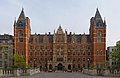 The Royal College of Music, London (from Portal:Architecture/Academia images)
 -
 Centennial Hall, Poland (from Portal:Architecture/Monument images)
 -
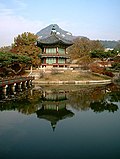 Gyeonghoeru Pavilion at Gyeongbokgung (from Portal:Architecture/Palace images)
 -
 Centre Block, Ottawa, Canada (from Portal:Architecture/Civic building images)
 -
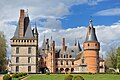 The castle of Maintenon. France (from Portal:Architecture/Castle images)
 -

-

-
 Battenberg Mausoleum, Sofia (from Portal:Architecture/Monument images)
 -
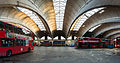 Stockwell Bus Garage, London (from Portal:Architecture/Travel images)
 -
 Bodie, California, Ghost town (from Portal:Architecture/Townscape images)
 -

-
 British Museum Reading Room, London (from Portal:Architecture/Academia images)
 -
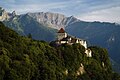 Schloss Vaduz at Vaduz, by Michael Gredenberg (from Portal:Architecture/Castle images)
 -
 The State Library of Victoria's La Trobe Reading Room, Melbourne, Australia (from Portal:Architecture/Academia images)
 -
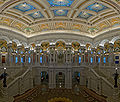 Library of Congress, Washington DC (from Portal:Architecture/Academia images)
 -

-
 Ksiaz, Silesia, Poland (from Portal:Architecture/Castle images)
 -
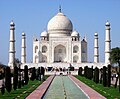 Taj Mahal, India (from Portal:Architecture/Monument images)
 -
 Arc de Triomphe, Paris (from Portal:Architecture/Monument images)
 -
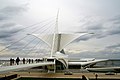
-
 Canberra, Australia (from Portal:Architecture/Townscape images)
 -
 Melbourne Docklands panorama (from Portal:Architecture/Townscape images)
 -
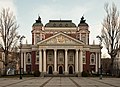 Ivan Vazov National Theatre in Sofia, Bulgaria (from Portal:Architecture/Theatres and Concert hall images)
 -
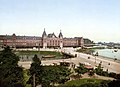 Amsterdam Centraal railway station (c. 1895) in Amsterdam, Netherlands (from Portal:Architecture/Travel images)
 -
-
 Stockholm Central Station, Sweden (from Portal:Architecture/Travel images)
 -
 L'Hemisfèric — Imax Cinema, Planetarium and Laserium at the Ciutat de les Arts i les Ciències by Diliff (from Portal:Architecture/Theatres and Concert hall images)
 -
-
 Quays Waterford, Ireland (c.1890-1900) (from Portal:Architecture/Townscape images)
 -

-
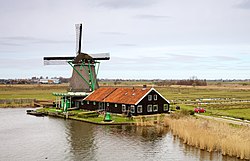
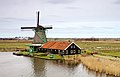 De Zoeker windmill, Netherlands. (from Portal:Architecture/Industrial images)
 -
 Aqueduct of Segovia (from Portal:Architecture/Industrial images)
 -
 Bronx Community College Library, by Detroit Publishing Company (from Portal:Architecture/Academia images)
 -

-
 Grand Central Terminal, New York, NY (from Portal:Architecture/Travel images)
 -
 Sydney Opera House, Australia (from Portal:Architecture/Theatres and Concert hall images)
 -
 Waldorf Astoria New York by Joseph Pennell (1860–1926) (from Portal:Architecture/Travel images)
 -
 United States Capitol, Washington DC (from Portal:Architecture/Civic building images)
 -

-
 John F. Kennedy Library, Boston (from Portal:Architecture/Academia images)
 -
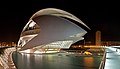 Palau de les Arts Reina Sofía, Valencia, Spain. by Diliff (from Portal:Architecture/Theatres and Concert hall images)
 -
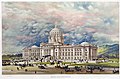 Competition design for the Montana State Capitol by George R. Mann 1896 (from Portal:Architecture/Civic building images)
 -
 Chicago skyline (from Portal:Architecture/Townscape images)
 -

-

-
 Toda tribe hut, India (from Portal:Architecture/Ancient images)
 -
-
 New York panorama (from Portal:Architecture/Townscape images)
 -
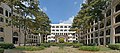 Al-Ameen College of Pharmacy, Bangalore (from Portal:Architecture/Academia images)
 -
 Egeskov Castle, Denmark (from Portal:Architecture/Castle images)
 -

-
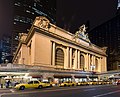 Grand Central Terminal, New York, NY (from Portal:Architecture/Travel images)
 -
 Albert Memorial, London (from Portal:Architecture/Monument images)
 -
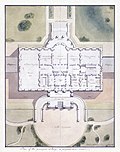 Site and principle storey plan of the White House, Washington DC (from Portal:Architecture/Civic building images)
 -
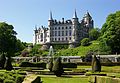 Dunrobin Castle, Sutherland, Scotland (from Portal:Architecture/Castle images)
 -

-
 Melbourne Skyline from Rialto tower, Australia (from Portal:Architecture/Townscape images)
 -
Aqueduct of Segovia, Spain (from Portal:Architecture/Ancient images)
-
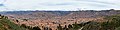 Cuzco, Peru (from Portal:Architecture/Townscape images)
 -

-
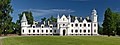 Alatskivi Castle, Estonia (from Portal:Architecture/Castle images)
 -
 Curve, Leicester, UK (from Portal:Architecture/Theatres and Concert hall images)
 -
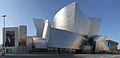 Walt Disney Concert Hall, Los Angeles (from Portal:Architecture/Theatres and Concert hall images)
 -
 Beirut, Lebanon, last third of the 19th century (from Portal:Architecture/Townscape images)
 -
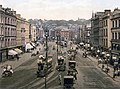
-
 Geodesic Radomes at Radome by Preston Keres, United States Navy (from Portal:Architecture/Industrial images)
 -
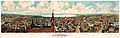 Panoramic view of Milwaukee 1890-1900 (from Portal:Architecture/Townscape images)
 -
 Treasury of the Athenians at Delphi, Greece (from Portal:Architecture/Ancient images)
 -
 Mespelbrunn Castle, Germany (from Portal:Architecture/Castle images)
 -
 Skyline of Philadelphia, Pennsylvania (from Portal:Architecture/Townscape images)
 -
 Cleveland Tower at Princeton University (from Portal:Architecture/Academia images)
 -

-
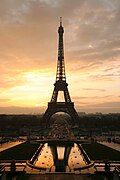 Eiffel Tower, Paris (from Portal:Architecture/Monument images)
 -

-
 Radcliffe Camera, Oxford, England (from Portal:Architecture/Academia images)
 -
 Library of Congress Main Reading Room, Washington DC (from Portal:Architecture/Academia images)
 -

-
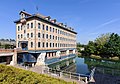 Menier Chocolate factory in Noisiel (from Portal:Architecture/Industrial images)
 -
 Manhattan from Staten Island Ferry (from Portal:Architecture/Townscape images)
 -

-
 Panorama of St. Louis, Missouri (from Portal:Architecture/Townscape images)
 -
 Grauman's Chinese Theatre, by Carol M. Highsmith (edited by Diliff) (from Portal:Architecture/Theatres and Concert hall images)
 -
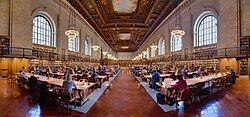
 The research room at the New York Public Library (from Portal:Architecture/Academia images)
 -
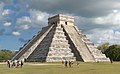 Mesoamerican step-pyramid nicknamed El Castillo at Chichen Itza (from Portal:Architecture/Ancient images)
 -

-
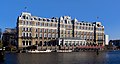 InterContinental Amstel Amsterdam (2009) in Amsterdam, Netherlands (from Portal:Architecture/Travel images)
 -

-
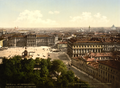 Saint Isaac's Square, Saint Petersburg, Russia (from Portal:Architecture/Townscape images)
 -

-
 Smithsonian Institution Building, Washington DC (from Portal:Architecture/Academia images)


.jpg?lang=en)


.jpg?lang=en)


Major topics
- Basic topics Architect • List of architects • Architecture • List of architecture firms • Style • List of buildings • New article announcements • more....
- Architectural history Timeline of architectural styles • Ancient Egyptian • Harappan • Inca • Mayan • Persian • Sumerian • Ancient Greek • Roman • Byzantine • Romanesque • Moorish • Gothic • Renaissance • Mannerism • Baroque • Ottoman • Palladian • Neoclassicism • Revival • Jugendstil • Art Deco • Modern • Postmodern • New Classical • more....
- Architectural theory Critical regionalism • Postmodernism • Deconstructivism • Modernism • Islamic • more....
- Architecture of the world Denmark • Germany • India • Madagascar • Norway • Russia • United Kingdom • United States • more....
- Awards Aga Khan Award • Driehaus Architecture Prize • International Architecture Awards • Pritzker Architecture Prize • more....
- Building science Architectural engineering • Earthquake engineering • Green building • Structural engineering • Acoustical engineering • Building defects • more....
- Construction Trades • Materials science • Project management • Project planning • more
- Landscape architecture Landscape architects • History • Desire lines • Energy-efficient landscaping • Greenway (landscape) • materials • Landscape design • Landscape maintenance • Landscape planning • Natural landscaping • Site planning • more....
- Law Contract law • Property law • Employment law • Land law • Tort • Equity
- Economics of Architecture Cost management • Quantity surveyor • Critical path analysis • Elemental cost planning • Cost–benefit analysis
- Planning and Urban design Topics • Zoning • Growth management • Land-use planning • New Urbanism • more....
- Architecture museums Shchusev Museum of Architecture • Museum of Finnish Architecture • German Architecture Museum
- By Year: 2015 in architecture • 2014 in architecture • 2013 in architecture • 2012 in architecture • 2011 in architecture • more....
- Vernacular architecture Timber framing • Thatching • Vernacular architecture of the Carpathians • Indian vernacular architecture • Vernacular architecture of Indonesia • Vernacular architecture in Norway • Open-air museum • Architecture of Samoa • Sasak architecture • Zakopane Style
Recognized content

Featured lists
|
|---|
|
Featured lists |
Featured pictures selections
| |||||||||||||||||||||||||||||||
|---|---|---|---|---|---|---|---|---|---|---|---|---|---|---|---|---|---|---|---|---|---|---|---|---|---|---|---|---|---|---|---|
|
|





Major subcategories

|
|

|

|

|
| Architects | Architecture | Architectural elements | Architectural history | Buildings & structures |

|
|

|

|
|
| Architecture by country | Construction | Landscape architecture | Structural engineering | Urban planning |
All categories

Things you can do
WikiProject Architecture

- Join the WikiProject.
- Improve: articles listed at Architecture pages needing attention
- Expand: stubs - Category:Architecture stubs - Category:Architect stubs - Category:Building and structure stubs
- Request an article: about a topic in architecture.
- Featured article candidates, Good article nominees, Articles for deletion, Requested moves
Associated Wikimedia
The following Wikimedia Foundation sister projects provide more on this subject:
-
 Commons
Free media repository -
 Wikibooks
Free textbooks and manuals -
 Wikidata
Free knowledge base -
 Wikinews
Free-content news -
 Wikiquote
Collection of quotations -
 Wikisource
Free-content library -
 Wikispecies
Directory of species -
 Wikiversity
Free learning tools -
 Wikivoyage
Free travel guide -
 Wiktionary
Dictionary and thesaurus


